The Library at the Heart of Learning
This is a subtitle for your new post
A School Experience that Shapes a Life
Uninterrupted Work Periods Give Students Time and Space
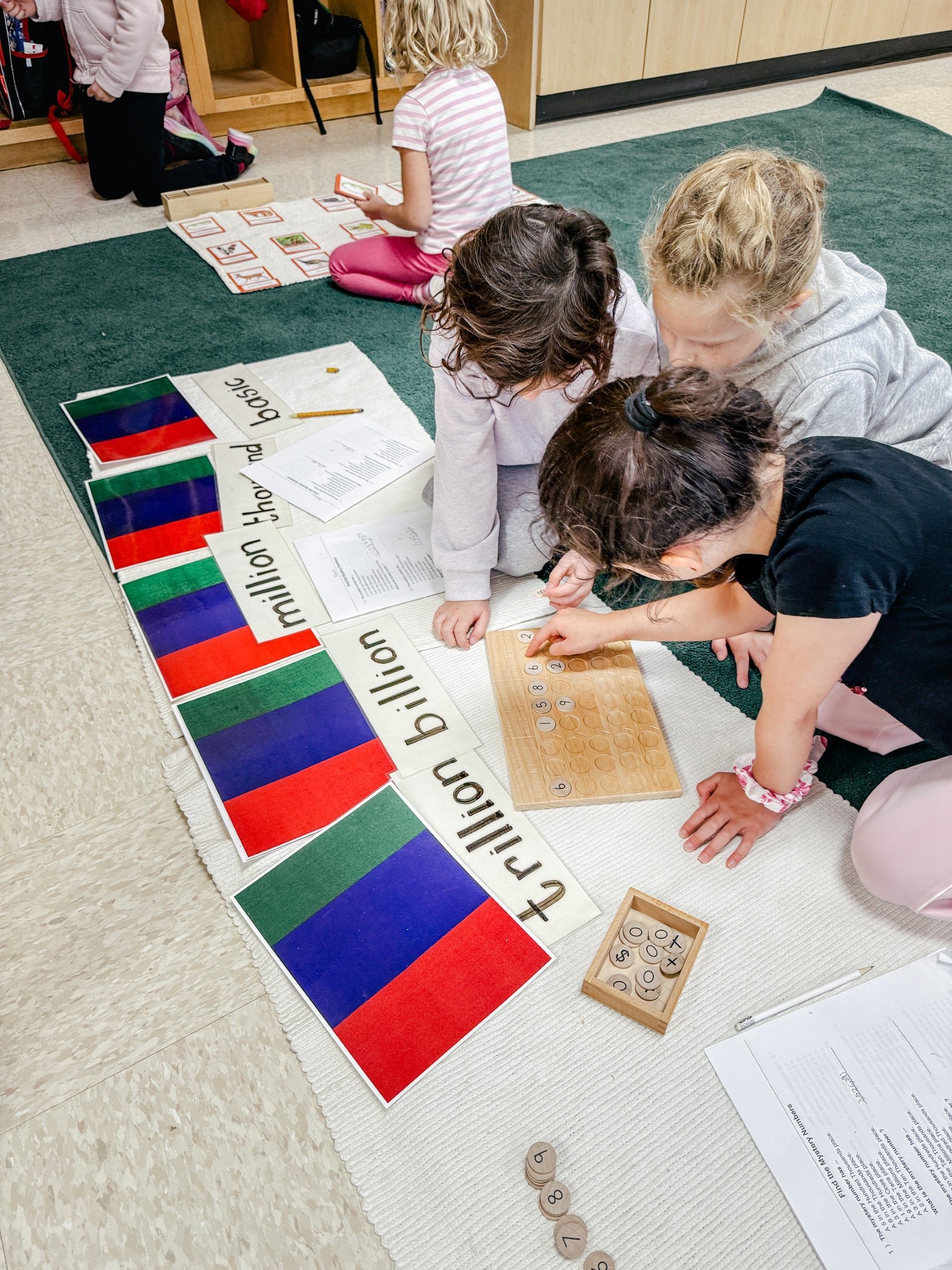
Join us for our Admission Preview and experience MSSA in action . Discover how a Montessori education guides children from concrete to abstract thinking, using carefully designed materials that foster a deep and lasting understanding of concepts. As you walk through our classrooms and observe the prepared environment, you will notice how independence, curiosity, and confidence are cultivated with intention at every level. Whether you are new to Montessori or already familiar with the philosophy, our Admission Preview is right for you. Join us on Wednesday, January 21, at 9:00 a.m. We look forward to welcoming you and sharing what makes The Montessori School of San Antonio such a special place for children and their families. FAQs Q: Do I need to register in advance? A: Yes, we ask families to RSVP so we can plan for group size and materials. Q: Where is the event? The Admission Preview will be held on the MSSA campus. Specific check‑in details will be included in your confirmation email. Q: Is this event for parents only, or can children attend? This event is for parents/guardians only, so you can focus on observing and asking questions. Q: Is this preview appropriate for all grade levels? A: Yes. Families interested in our early childhood, elementary, and middle school programs are all welcome. We will highlight how Montessori looks at different ages. Q: How long will the preview last? A: Families can plan on being here for about 90 minutes, which includes a brief introduction, a campus tour, and time for questions. Q: I am new to Montessori. Is this event still right for me? A: Absolutely. The preview is an ideal way to learn what sets Montessori apart, including the use of hands‑on materials, mixed‑age classrooms, and the focus on independence and deep understanding. Q: Will we see classes in session? A: Yes, you will observe classrooms during work time, which offers a glimpse into how students move, choose work, and interact.
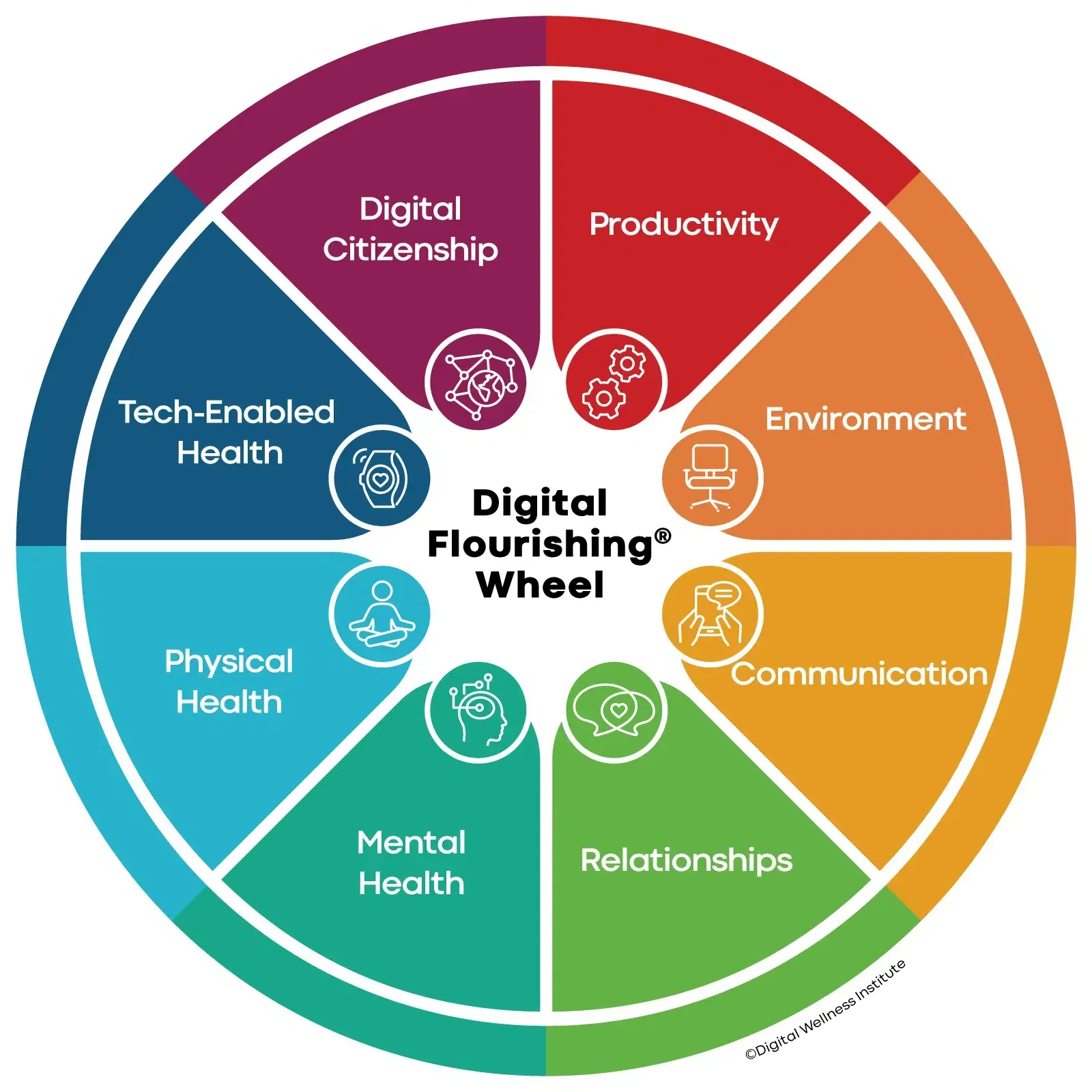
by Theresa Powers, Program Director One thing that is clear about the digital landscape is that it changes rapidly, and often as parents, we are not up to date with the latest changes. Not every parent is aware of how TikTok works, as it’s algorithm makes content recommendations personalized for each user by offering up videos based on past use and displaying them on the user’s For You page. So if your child is looking at rollercoasters, more rollercoasters are being offered up. But if your child is searching for viral internet stunts, they can range from silly and harmless to very dangerous. And as more and more video/reels on social media clock in around 15 – 60 seconds, there’s a lot of content to see in a short time. One way to stay up to date about the changing digital landscape no matter what your child’s age is to visit www.commonsensemedia.org Since 2003, Common Sense Media has been a trusted guide for parents for media and technology, as you can vet games, apps, and movies and search by age, topic, and platform. The site also has helpful FAQs such as “ how much screen time is okay for my kid ?” and “what’s the deal with Roblox?” as well as lots of digital literacy content for parents. It has a free searchable engine, but also has reasonable subscription rates for expanded content that are well worth the money. If your children are younger, it’s a great place to start in order to prepare for the digital future, and if your children are older, you can check out their family media agreement that focuses on communication and wellness: https://www.commonsensemedia.org/sites/default/files/featured-content/files/common_sense_family_media_agreement.pdf Every family has their unique media and technology needs, and www.commonsensemedia.org can be a helpful tool for trustworthy information.
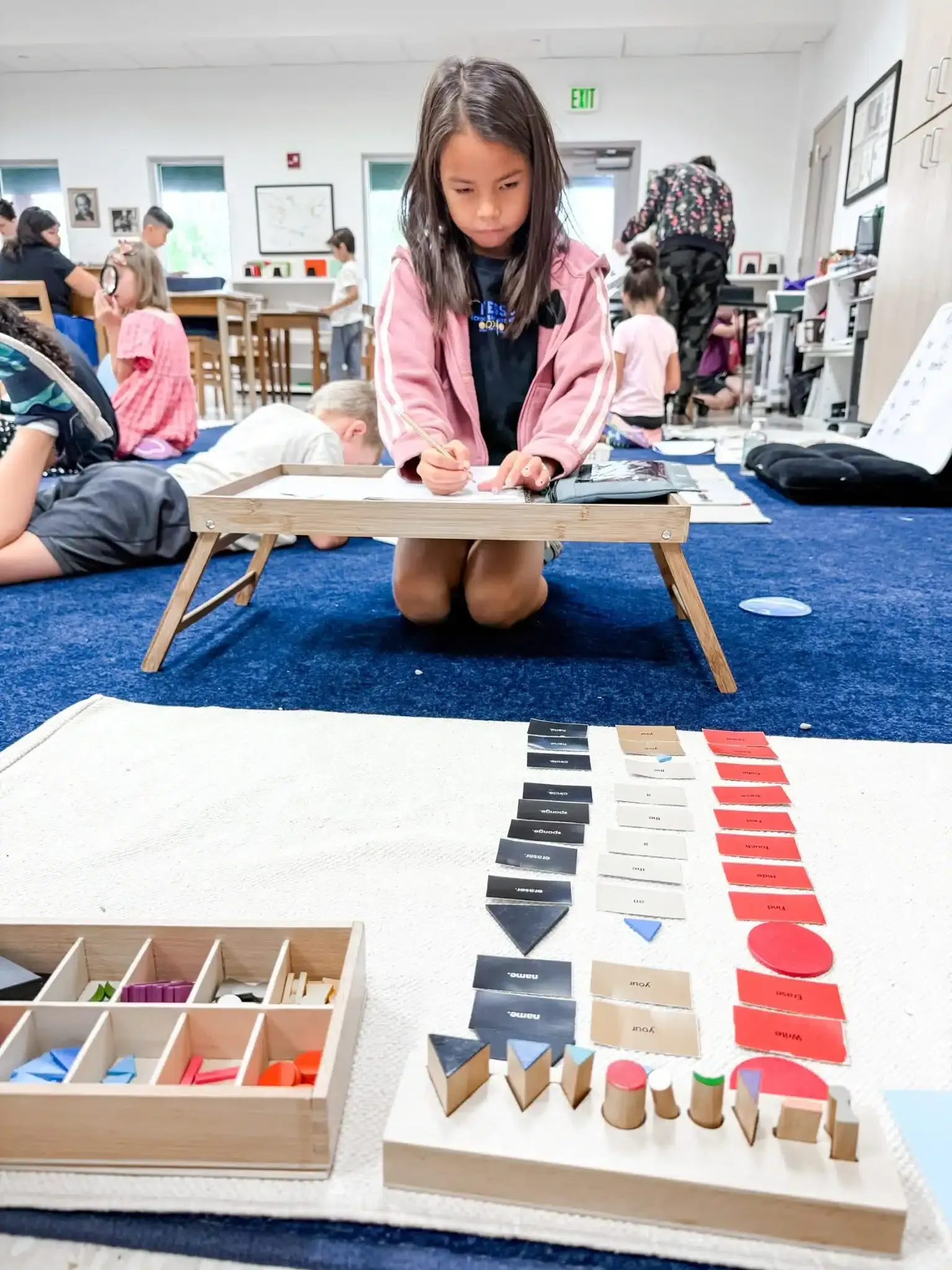
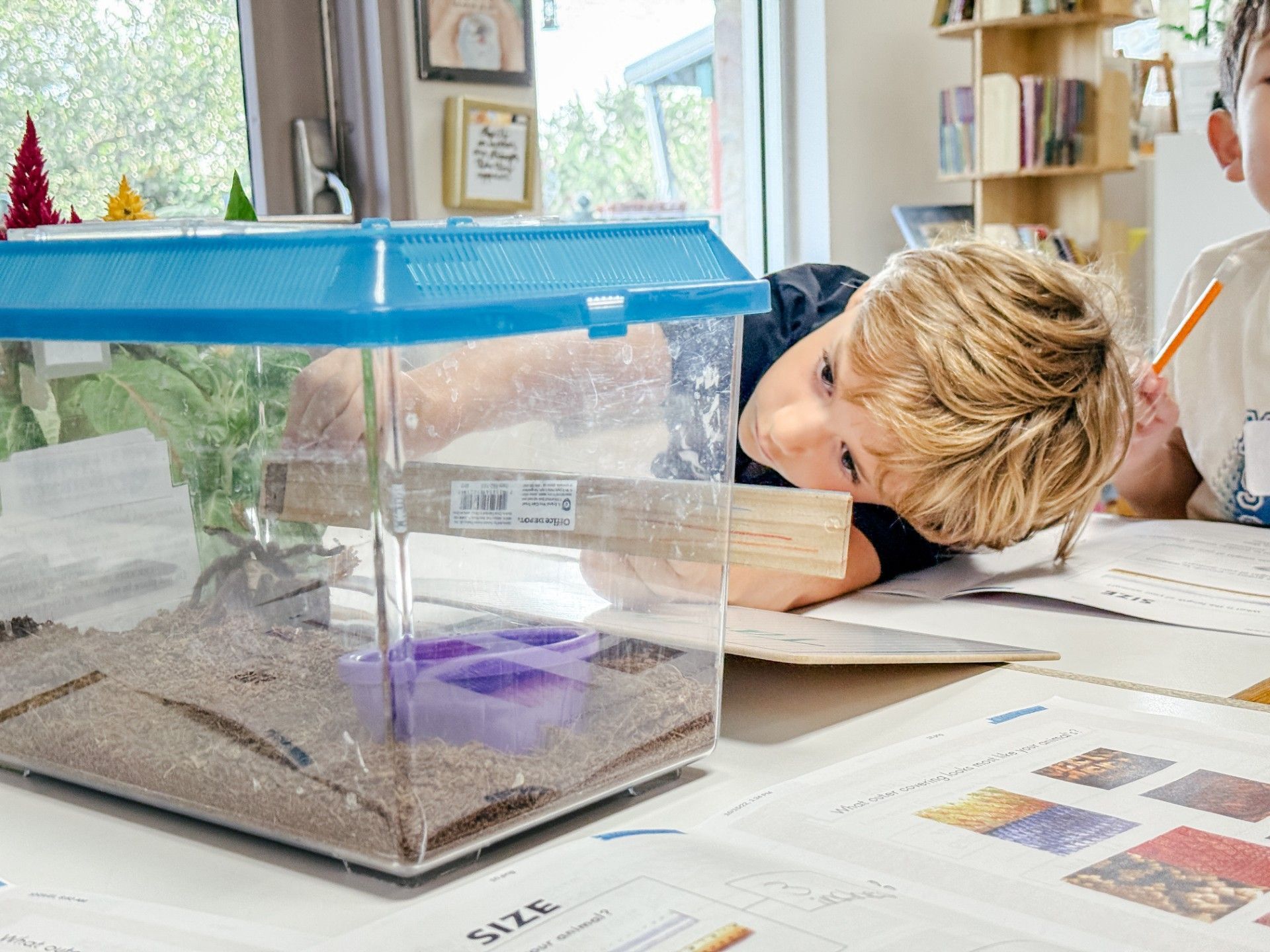
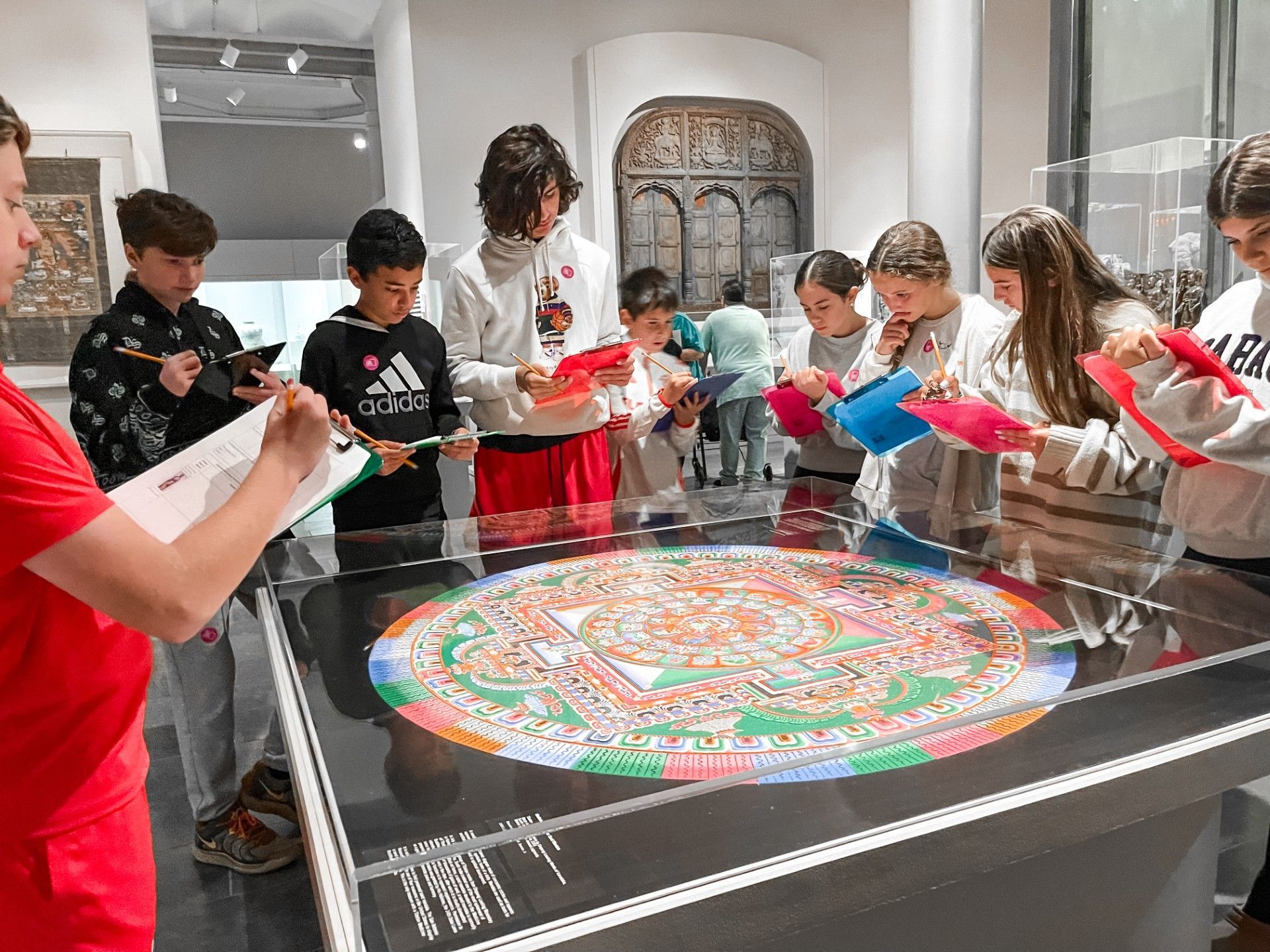
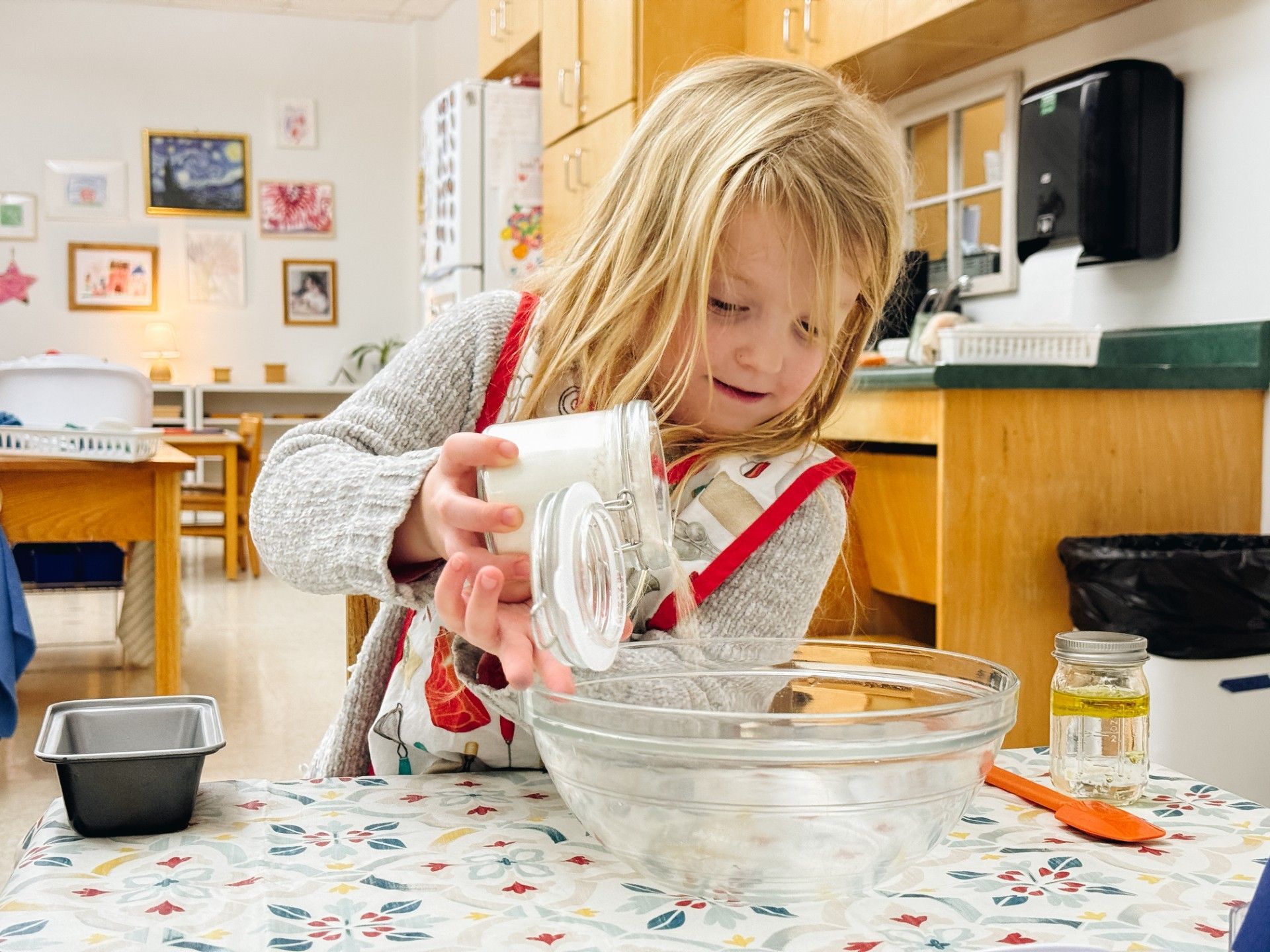
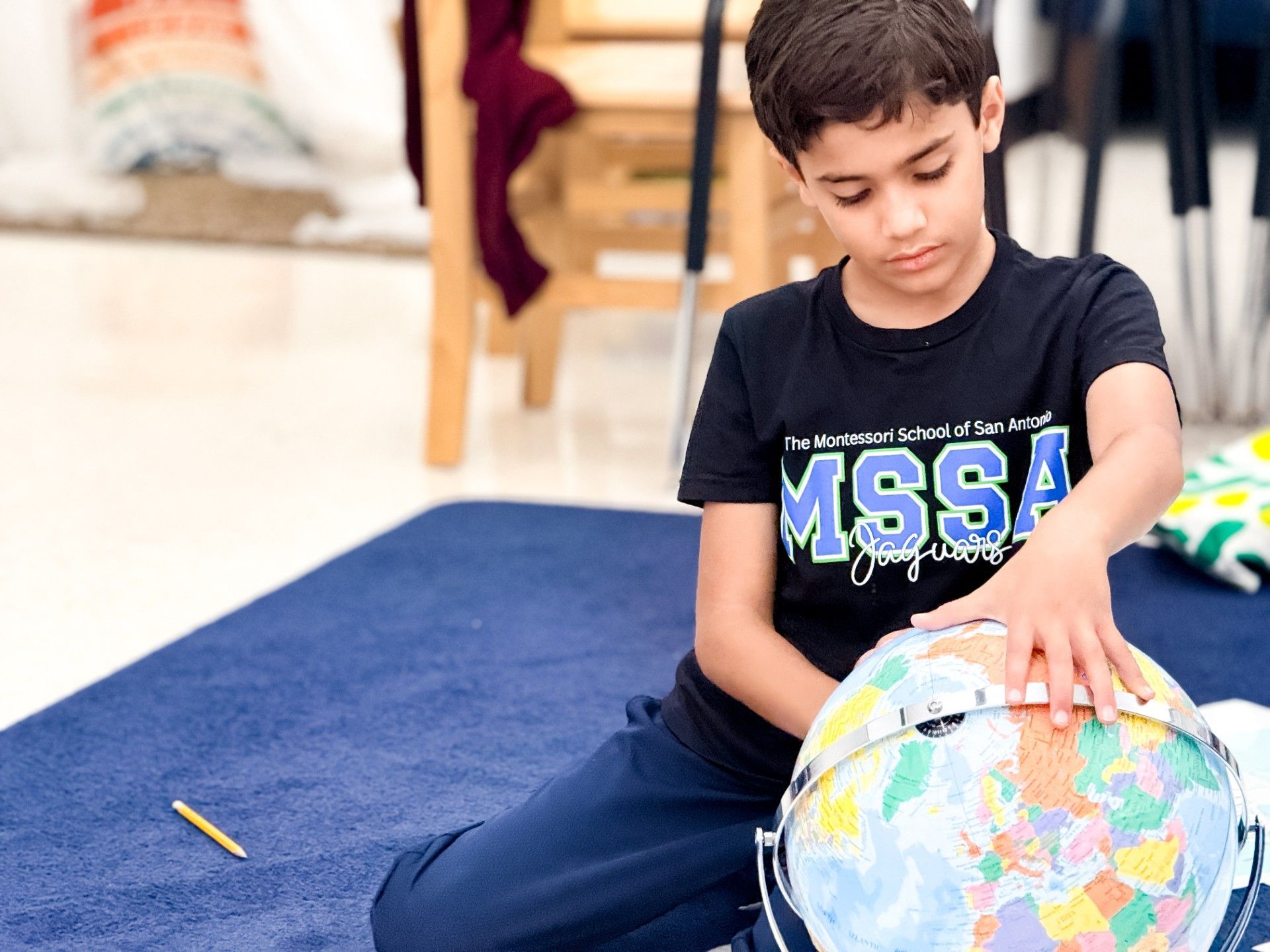
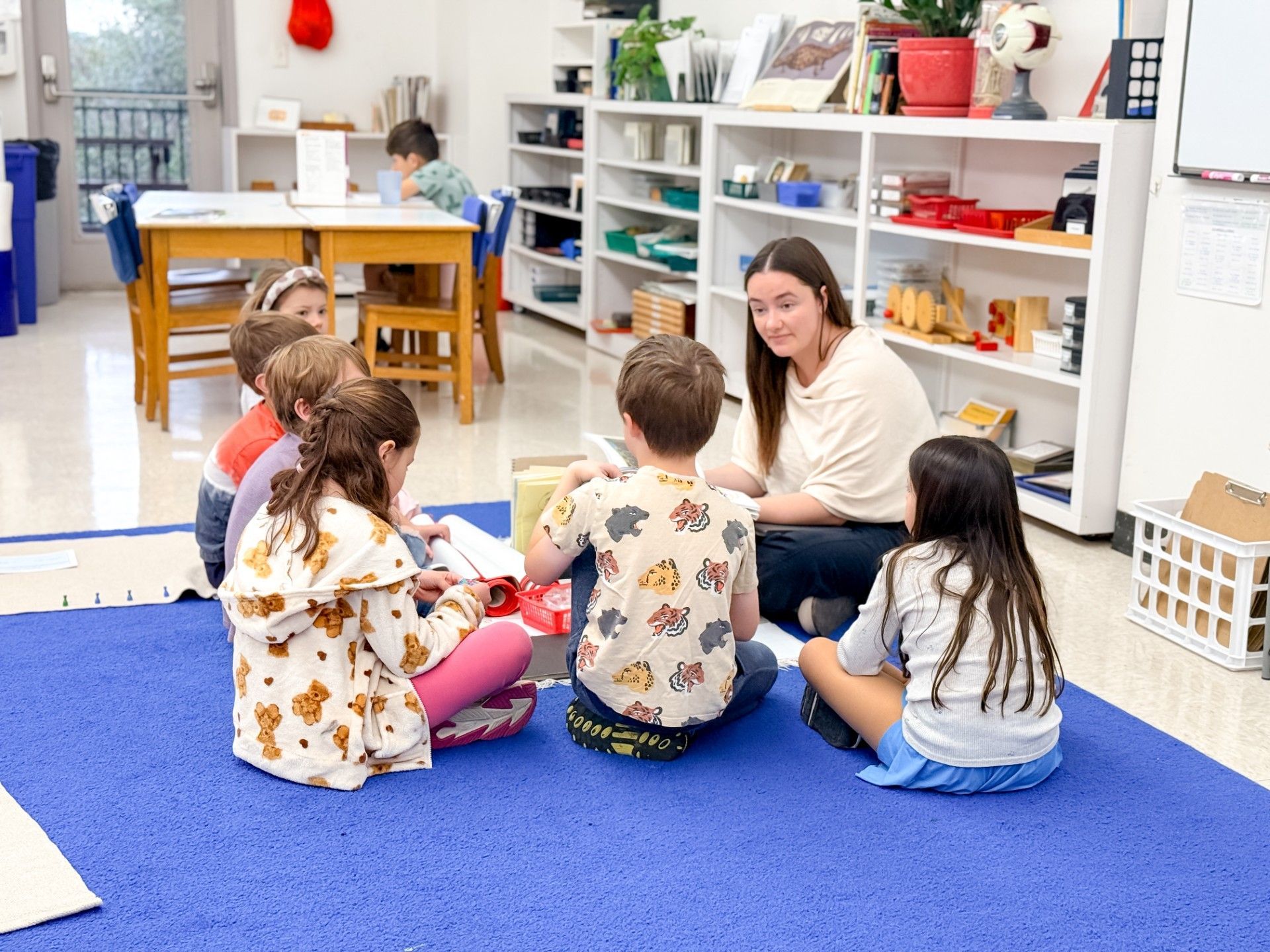
Just because a school uses the term Montessori doesn’t mean all Montessori schools are the same. High fidelity Montessori schools demonstrate five core pillars : certified Montessori teachers, multi-age classrooms, authentic learning materials, child-driven work and choice, and long periods of uninterrupted focus. At The Montessori School of San Antonio, these elements are foundational, ensuring that your child receives a genuine Montessori education based on proven principles that nurture curiosity, independence, and leadership. Trained Montessori teachers are fundamental to authentic implementation. These educators, credentialed through recognized Montessori training programs, possess deep knowledge of child development and the materials that guide it. They observe each student’s natural interests and abilities, providing lessons that match developmental readiness. Through this expertise, teachers cultivate independence, curiosity, and respect within a prepared environment that supports every learner’s growth. The multi-age classroom is another essential component, creating a dynamic learning community that mirrors real-world interactions. Students remain in the same class for three years, thereby developing continuity, cooperation, and leadership skills. Younger students learn through observation and imitation, while older peers reinforce their understanding through mentoring and teaching. This structure supports personalized progress and nurtures a sense of belonging. Classrooms are organized by developmental stages, aligning with children’s cognitive and social growth. Montessori materials define the hands-on nature of this learning approach. Each material isolates a single concept or skill, allowing children to explore abstract ideas through concrete experiences. Carefully sequenced lessons help students move from manipulation to mastery, building deep intellectual understanding. The materials appeal to the senses and invite active exploration, encouraging children to discover rather than be instructed. Child-directed work fosters intrinsic motivation and self-regulation. Within a thoughtfully organized, calm classroom, children have the freedom to choose activities that capture their curiosity. This independence encourages engagement, focus, and responsibility. Teachers act as guides, ensuring order and respect while allowing students to explore individually or collaboratively at their own pace. Uninterrupted work periods complete the Montessori cycle, providing children with sustained time to engage deeply in their chosen tasks. Extended blocks of time—typically two to three hours—allow students to develop concentration, persistence, and a sense of completion. Rather than dividing the day into short, segmented lessons, Montessori classrooms value focused work that fosters both independence and community responsibility. Together, these five elements create a coherent system that honors the developmental needs of each learner and preserves the fidelity of Montessori education at its highest level. At MSSA, we take pride in keeping these pillars at the forefront of our mission and philosophy.
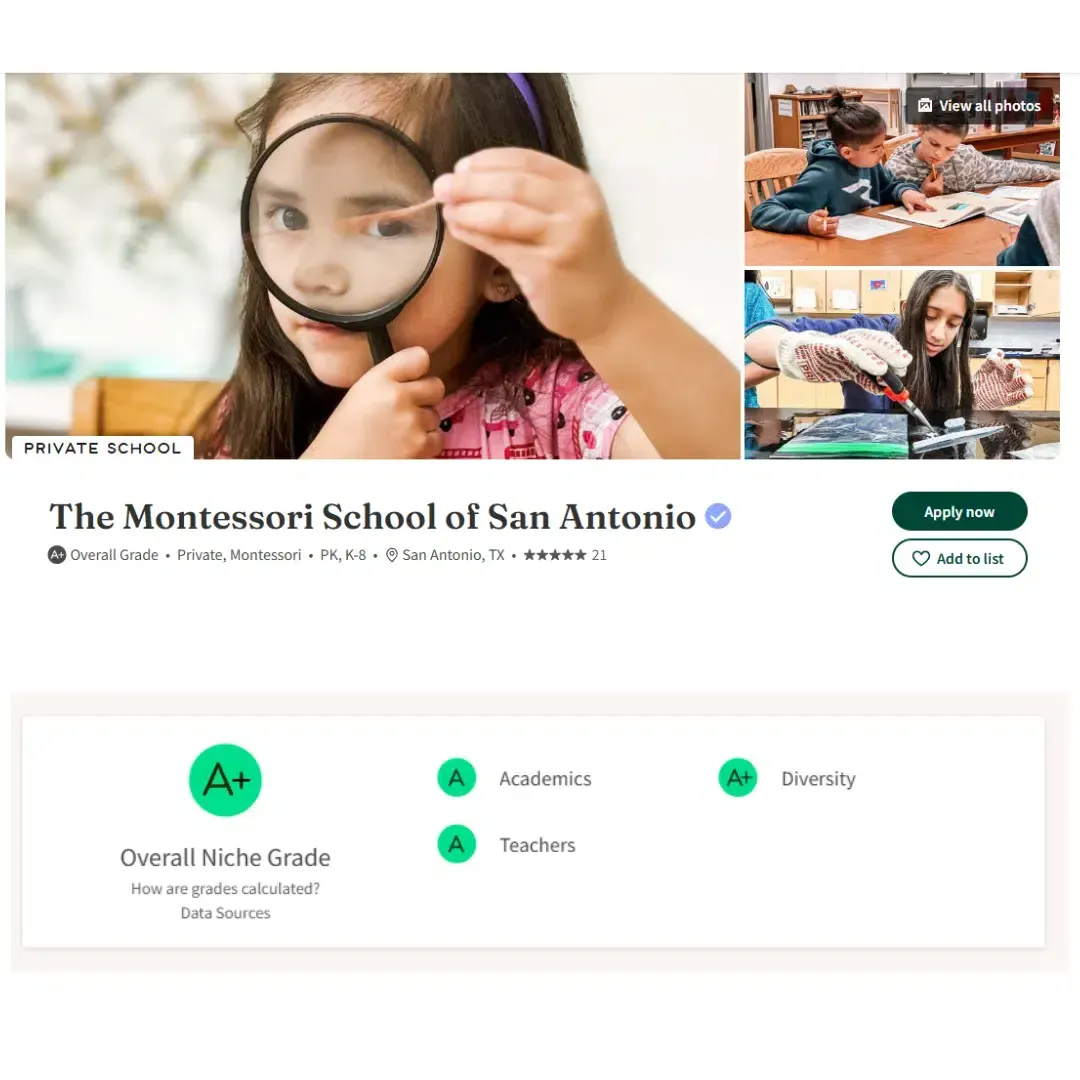
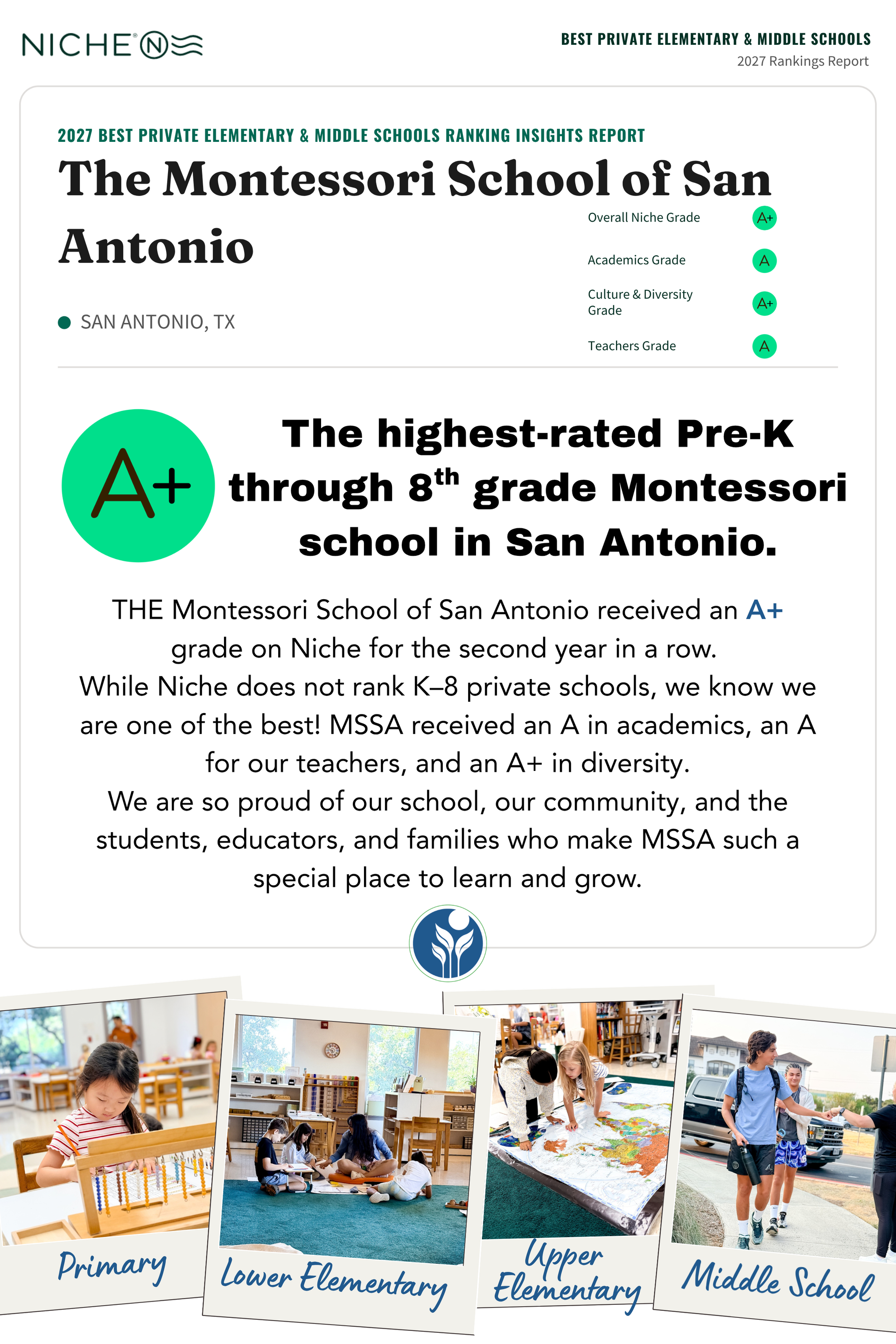
We are thrilled to share that The Montessori School of San Antonio has been recognized with an A+ grade from Niche, a trusted platform that analyzes school performance through data, parent feedback, and student reviews. With this grade, MSSA is the highest-rated fully Montessori school in San Antonio. This outstanding rating reflects our continued dedication to providing an exceptional learning environment where children thrive both academically and personally. Highlights of our evaluation include: A in Academics – Recognizing our strong curriculum and commitment to educational excellence. A for Teachers – Reflecting the passion, expertise, and care our faculty bring to every classroom. A+ for Diversity – Celebrating the inclusive and welcoming community that makes MSSA a place where every student belongs. This recognition is a testament to the shared effort of our teachers, staff, students, and families. We are proud of this accomplishment and look forward to building on this success as we continue to guide our students in becoming passionate learners, independent thinkers, and engaged citizens.

Dear MSSA Families, It was great to see so many new and familiar faces at MyMSSA Day yesterday. The smiles, handshakes, warm hugs, and the excitement and joy of coming to school were the perfect way to kick off the 2025-2026 school year! The start of school can generate feelings of excitement and also fear or anxiety of the unknown, especially for those children who are new to our community or moving up to a new classroom. Here are some back-to-school tips for you and your Montessori child, some of which were shared by Dr. Siggie , a child development specialist. 1. Set a consistent bedtime routine. Following a routine at bedtime provides an opportunity for you to nurture and bond with your child. This structure and repetition make children feel safe, which will help them fall asleep faster, help them stay asleep longer, and wake up feeling rested. A well-rested child leads to better behavior during the day and can also have a positive impact on your child’s overall development, including language development, cognitive flexibility, and executive function. 2. Allow time for children to be independent. This requires patience on your part, but giving children the time and teaching them how to accomplish a task, rather than just hurrying through it or doing it yourself, will pay off in the future. Even more importantly, children gain a sense of empowerment knowing what they can do on their own. This newfound self-confidence leads to a happier, more independent child who will begin to ask more often, “Can I try that by myself?” Take advantage of those opportunities! 3. Give children the freedom to make mistakes . Uninterrupted time to experiment, repeat tasks, and make mistakes gives children the opportunity to learn on their own. Observe this process from a distance. Give them the chance to grow out from under your shadow and watch them blossom. 4. Build confidence by helping children help themselves. Allowing children to do for themselves encourages independence. Every day tasks provide many opportunities for independence. Carrying their dishes to the sink, packing their own lunch, pouring their own water, making their own snacks, picking out their own clothes to wear, and dressing themselves are just a few examples to get you started. 5. Limit distractions and provide activities that allow for long periods of concentration. Turning off distractions allows children the time to absorb and process information. Limiting the number of times that an adult interrupts the child helps them develop a longer attention span and also models courtesy and respect. If you must interrupt a child, leave the activity untouched and allow them to return to it. 6. Provide a sense of order. Children thrive in an orderly environment. Show your child that things have a place and have them return items to that place before moving on to a new activity. Schedules also provide order and help children feel more comfortable because they know what to expect. Establish and consistently follow routines at home for getting ready for the day, mealtimes, and bedtime. 7. Be positive about school. Focus on security before focusing on fun. Model a positive attitude and excitement when you talk about school. Talk to your child about what to expect. Your child will feed off your energy. If you are anxious about school, it’s likely your child will be as well. Of course, you want your child to have fun at school! To make plenty of new friends, enjoy their teacher, and feel happy and engaged. But here’s the thing: your child can’t have fun until they feel safe and secure (That’s true for all of us). Instead of working hard to “sell” them on all the fun they’re going to have: “You’ll love it! You’ll make so many new friends… Don’t worry, don’t be nervous! You’ll have so much fun!” Focus first on building a sense of security. That can sound like: ‘ I know this is new and you might feel a little nervous. Often, when we try something new, we feel both nervous and excited. I know you will be ok, even if it’s a bit hard at first. It might take some time to get used to, and that’s totally ok. You know how I take care of you at home? At school, your teacher will take care of you. And you will also take care of yourself. If you’re thirsty, they will give you water; if you’re a little sad, they will hold your hand. You are safe there, and your teacher will watch over you until I pick you up. Your teacher’s name is… When you need to ask her anything, what do you do? Yes, you can ask for what you need. Here’s your backpack and your lunchbox; let’s practice opening and closing them. If you want to play with someone, what can you say? Yes, you can ask, ‘Can I play with you?’ (https://drsiggie.com/free-resources/) 8. Don’t be surprised if there is a meltdown after school. You pick up your child and you’re excited to hear about their day: Did they make a new friend? Eat their lunch? Like their teacher? You’re ready for smiles… and instead, you get whining. Complaining. Tears. Silence. Maybe even a full-blown meltdown. It’s important to keep in mind that your child just finished a long, physically and emotionally demanding day. They’ve been trying hard to keep it together—to listen, follow instructions, manage social interactions, and hold in their feelings. And when they see you, their safe person? It all comes pouring out. (Think of how you feel after a long day of work. You may not want to talk right away. You often just want to decompress.) So instead of jumping into questions, follow their lead. If they’re ready to talk, great! If not, offer a soft landing: a snack, a walk, or a quiet activity. Then, once they’ve settled, you can ask about their day. (https://drsiggie.com/free-resources/) My hope is that you come to know and love MSSA and Montessori education as I do. I’m excited to be on this Montessori journey with you and your family. It’s a privilege to partner with you and to watch these children grow into passionate learners, independent thinkers, and engaged citizens. Warm regards, Emily
Are you thinking about getting your child a smartphone or iPad? You might want to hit pause. Research shows that waiting until your child is older can have big benefits for their health, development, and happiness. Here’s what every Montessori parent needs to know. The Hidden Costs of Early Screen Time It’s tempting to hand over a device, especially when so many other families are doing it. According to Common Sense Media, by age 12, 71% of kids have a phone, and by 14, that number jumps to 91%. But just because it’s common doesn’t mean it’s best. 1. Brain Development and Learning: Screen Time Slows Progress Studies tracking thousands of children have found that those who spend more time on screens at ages 2 and 3 do worse on developmental tests later on, even after accounting for other factors. More screen time at a young age is linked to delays in fine motor skills, communication, and problem-solving. The constant stimulation from devices can also make it harder for children to focus and finish tasks, which can hurt their academic performance. 2. Attention, Behavior, and Emotional Health Kids who get lots of screen time are more likely to have attention problems, act out, and struggle with self-control. Excessive use of smartphones or iPads can even lead to addiction-like behaviors, making it tough for children to step away from their devices. Plus, the instant feedback from screens can make it harder for kids to enjoy activities that don’t provide immediate rewards, like reading or playing outside. 3. Sleep Disruption and Physical Health The blue light from screens interferes with melatonin, the hormone that helps us sleep. Children who use devices before bed are more likely to have trouble falling asleep and may not get enough rest, leading to moodiness, trouble focusing, and even lower school performance. Too much screen time also means less physical activity, which increases the risk of obesity and related health problems. 4. Social Skills and Real-World Friendships Spending too much time on devices can stunt social development. Children who are glued to screens may have a harder time making friends and learning how to interact in person. They miss out on valuable opportunities to practice empathy, cooperation, and conflict resolution skills that are at the heart of Montessori education. 5. Mental Health Risks Younger children exposed to social media and constant digital comparison may develop anxiety and depression symptoms. Unrealistic images and the pressure to keep up with peers can take a toll on self-esteem, especially when kids are too young to process what they see online. What Do the Experts Say? The American Academy of Pediatrics and child psychologists agree: there’s no “perfect” age for a first phone, but waiting as long as possible is often best. Most experts recommend holding off until at least middle school, around ages 12 or 13, when phones become a necessity for independence, not just entertainment. What Can Parents Do Instead? Encourage creative, hands-on play and outdoor activities. Set clear limits on screen time and stick to them. Model healthy device habits yourself. When the time comes, introduce technology gradually, with clear rules and open conversations about safety and responsibility. “You wouldn’t give a child a lawnmower and send them out to mow a lawn without any kind of instruction. Children need scaffolding. It’s up to parents to provide that.” – Dr. Mari Radzik, Children’s Hospital Los Angeles The Montessori Way: Real Experiences, Real Growth Montessori education is built on the idea that children learn best through real-world experiences, not virtual ones. By waiting to introduce phones and iPads, you’re giving your child the gift of time to build focus, curiosity, resilience, and strong relationships that will last a lifetime. So, before you hand over that device, remember: sometimes, the best connection is the one you build face-to-face.